This thesis argues that Faizullah established a subgenre of “panoramic paintings” at Awadh by incorporating pictorial idioms from mid-seventeenth and early eighteenth-century Mughal painting. Rather than perceiving his work primarily as shaped by European prints and technique, I contend that the zenana building (female quarters in elite households and palaces) in Faizullah’s compositions functions as a narrative apparatus, a space where literary imagination and physical reality are made to overlap simultaneously, and that this architectural logic allowed him to articulate a distinctly Awadhi cultural identity in dialogue with Mughal heritage.
One example makes the stakes of this argument visible. Women Bathing Before an Architectural Panorama (c.1765, Cleveland Museum of Art, fig. 1) depicts women bathing and enjoying themselves in the zenana. Faizullah deploys an architectural complex featuring a luxuriant garden, large pool, flowing fountains, arcaded verandas, and tiered balconies to establish a secluded space for the women’s recreation. The eight women are immersed in the pool, captivating viewers with their distinctive poses and active bodies in water, while two women stand upright at the boundary, guarding this private space. On the second story of the building on the right, a group of women enjoys music performed by entertainers. Further beyond, a garden replete with flowers, orchards, fountains, and pavilions extends into yet another garden, the oblique lines leading to a singular point reinforcing a perspectival vision and a seemingly infinite vista.
Yet seemingly unrelated vignettes in the upper register disrupt this pleasure. In the far distance, a river flows, and on its opposite bank, marching soldiers shoot cannonballs toward a fortress. Why does Faizullah juxtapose subjects with such distinct emotional connotations—immersive pleasure and violent conflict? Some scholars have interpreted this panoramic vision as shaped by European prints, but this explanation leaves the deeper reason for the composition inadequately elucidated. I argue that the juxtaposition is not a formal curiosity but a semantic one: the zenana building structures both registers simultaneously, holding literary imagination and historical reality within the same pictorial field.
My thesis builds upon recent scholarship that emphasizes the agency of Awadhi artists beyond their role as mere executors of patronage. Parul Singh argues that the scholarly emphasis on the European scientific perspective has overshadowed Faizullah’s own artistic strategies and his subtle depiction of sovereignty and topographical representation. Kavita Singh similarly contends that the artist purposefully utilized perspective to convey particular political and cultural messages. Central to my analytical framework is the concept of bhava—the affective and sensory mood that Indian painters encoded into architectural and landscape settings, accessible in its full depth only to viewers trained in the literary and artistic traditions that gave it meaning. For Dipti Khera, the painted landscape is not merely a visual record but a layered evocation of place, mood, and literary resonance that rewards the initiated connoisseur while remaining opaque at that level to the uninitiated. I apply this framework to Faizullah’s paintings, arguing that his architectural compositions encode literary meaning through visual structures that a viewer conversant with Mughal poetic and pictorial tradition could read. The subsequent loss of this literary depth, in the hands of European patrons, registers precisely the limits of bhava as a communicative system across cultural boundaries, or in the hands of painters working for Different regional courts deliberately deploy strategies to retain Faizullah’s compositional grammar while substituting a different regional identity.
- Cultural Prosperity in Awadh: Historical Context and Architectural Foundations
Awadh, located to the east of Delhi, established its autonomy under Saadat Ali Khan (r. 1722-1739), also known as Burhan ul-Mulk, whose family had migrated from Persia. Appointed subedar by the Mughal emperor Muhammad Shah in 1722, Burhan ul-Mulk consolidated local authority by recognizing the privileges of established zamindars, gradually shifting from seeking a central position at the imperial court toward asserting regional autonomy while maintaining nominal Mughal allegiance.
As the Mughal center weakened—particularly after Nadir Shah’s invasion of Delhi in 1739—regional powers like Awadh began asserting their aesthetic and political visions. Under Shuja ud-daula and his son Asaf ud-daula, Awadh’s city expanded substantially. A new Nawabi architectural style emerged, selectively combining Mughal, Persian, and European conventions into a distinctive Awadhi idiom. Architecture became a means of expressing dynastic authority: Shuja ud-daula’s commission of the tomb complex of his father, Safdar Jang, in Delhi demonstrated allegiance to Mughal building traditions while simultaneously signaling the transfer of cultural power to regional centers. In addition, elite women such as Bahu Begum and Sadr al-Nisa Begum held considerable political and economic influence, actively patronizing art and architecture, providing stability at critical moments in Shuja ud-Daula’s reign. Structures like the Bahu Begum ka Maqbara in Faizabad, adorned with stucco in the distinctly Awadhi style, commemorates their influence.
Yet the Mughal Empire did not entirely lose its cultural hegemony. Although it is true that financial support for the arts decreased, the Mughal emperors diversified their patronage. In Delhi, the focus of patronage has shifted toward urban area development. Instead of building new monuments, the patrons of Delhi requested architecture and paintings that could link to themselves and convey religious values through spatial visualization. While the Chishti dargah endorsed by the emperor highlights their historical and spiritual ties to the early Mughals and Sufis, the idealized geographic painting of Shahjahanabad connects the religious meaning with the actual city.
Awadh could absorb the Mughal cultural heritage, such as painterly and poetic traditions, that Delhi was diminishing. Many of the painters migrated from Delhi to Awadh, including Chitarman, Nidha Mal, Hunhar, and Mir Kalan Khan. These artists maintained strong connections to the early eighteenth-century Mughal style developed under Muhammad Shah, actively revisiting and reframing earlier Mughal paintings. By copying, borrowing, and recirculating pictorial elements, they created cultural and genealogical affiliations with seventeen-century Mughal heritage that served both their own artistic purposes and the ambitions of their patrons.
2. Architecture as a Tool for Narration and Circulation of Pictorial Idioms
It was within this environment of artistic migration, active patronage, and the recirculation of Mughal pictorial heritage that Faizullah developed his distinctive visual logic. In Women Bathing Before an Architectural Panorama, Faizullah meticulously frames women with multiple layers. On the flanking terrace, the women perform and watch the center of the composition, where the bathing women play in the pool, and there are the sakhi figures who stand at the edge of the frame to mediate between these two groups. I demonstrate that Faizullah arrived at the visual logic between the characters from his period marked by increased architectural construction, the gathering of poets and artists, and active patronage from Awadhi nawabs, elite women, and Europeans. Faizullah must have had enough chances to learn the pictorial idiom of eighteenth-century Delhi painters and integrate it to invent his own genres and styles. Central to this invention was a particular visual logic he inherited from Chitarman: the use of architectural framing to organize multiple temporal and spatial registers within a single composition, encoding literary meaning in visual structures that rewarded a connoisseur versed in Mughal poetic tradition.
Chitarman’s Lovers and Beloved: A Composite of Scenes from Persian, Urdu, and Sanskrit Literature (fig. 2) and Tiered Court Scene (fig. 3), both produced around 1735, are comparable here. These paintings present multi-tiered palatial imagery and juxtapose distinct narratives, each depicting events unfolding across layered spaces within garden and palace interiors. A notable feature of Lovers and Beloved is the deliberate repetition of an identical female figure across multiple scenes—for instance, appearing as the woman in Farhad and Shirin’s story, as the woman Hafiz fell in love with, and as the figure serving wine to Majnun. As Kavita Singh observes of Mir Kalan Khan’s related Lovers and Musician in a Landscape (fig. 4), such varying rendering of figural types serves to visualize a musical or literary performance: the woman in yellow clothing structures the court as a space of literary experience, envisioning figures from Persian poetry within a palatial setting. The repetition is not inconsistency but method—legible as such only to a viewer who recognizes the literary figures being evoked—making the architectural space a site where multiple temporalities coexist for the initiated eye.
In the Tiered Court Scene (fig. 3), Chitarman extends this logic further. The buildings create oblique lines that appear to protrude toward the viewer, while scenes with gods unfold within them. Women on the terraces observe the deities below, positioned as an audience witnessing a divine narrative staged within the architectural frame. Chitarman depicts women as figures alongside gods in an imagined visualization, or stage actors and musicians with deities, as well as viewers and storytellers who enjoy this scene inside the zenana buildings.
Molly Aitken’s analysis of yogini paintings in Awadh makes the compositional mechanism at work here. In those paintings, women are positioned at the periphery of the composition, performing music; it is precisely this performance that generates the central figure—the yogini visualizes it not as a physical present being but as the imaginative image of the women’s song. The performance at the edges opens the center of the composition; what appears there belongs to literary rather than physical reality. Moreover, this visualization is perceptible only to a viewer who carries the literary and musical knowledge that allows the central space to be read as conjured rather than merely empty. The architectural frame does not contain this process—it is what makes it legible to the trained eye, separating the performers from the space they conjure while holding both within a single pictorial field.
This is the logic Faizullah directly inherits and applies. In Women Bathing Before an Architectural Panorama, the women on the flanking terraces visualize their music, performance, and storytelling in the scene in the pool below. The bathing women at the center are what the performance conjures: a literary body, summoned through the architectural structure that separates yet connects the two registers. The motif of this bathing women recalls the Bhagavata Purana narrative of Krishna and the gopis at play in the river, where the women’s devotional engagement makes Krishna’s presence visible. It resonates with a viewer who carries this literary knowledge, which Mughal artist Payag already provided in Eight Women Bathing (fig. 5) around 1650 CE. Women bathe at night near a forest pool, with a slightly blue-tinged male figure in the background evoking Krishna’s presence without naming it. Faizullah inherited the iconography from this painting, as much as Payag represents his painting with women capturing the essence of zenana space on the edge. Using the zenana as the frame within which the boundary between the real space and the imagined, mythical space dissolves. This iconographic reading is capable only for the viewer equipped to perceive it.
The same mechanism works across Faizullah’s other paintings. In The Women of Egypt Cut Their Fingers Peeling Oranges When First Seeing Yusuf’s Beauty, two winged women at the top of the painting take up the role of performers and appreciators, framing the Quranic narrative of Yusuf unfolding below with a backdrop of an architectural setting. In the LACMA version (fig. 6), the flower garden with an architectural backdrop enacts scenes from Shrin and Farhad, and Layal and Majnun, while a crowd of spectators at the right edge stands as connoisseurs attuned to the literary mood of the entire cityscape. In each case, the architectural setting provides the spatial condition under which literary imagination becomes represented. In the paintings of Faizullah and his descendants, the architectural apparatus functions as a backdrop of storytelling for literature, resonating with a Lucknow viewership capable of decoding these visual-literary intersections.
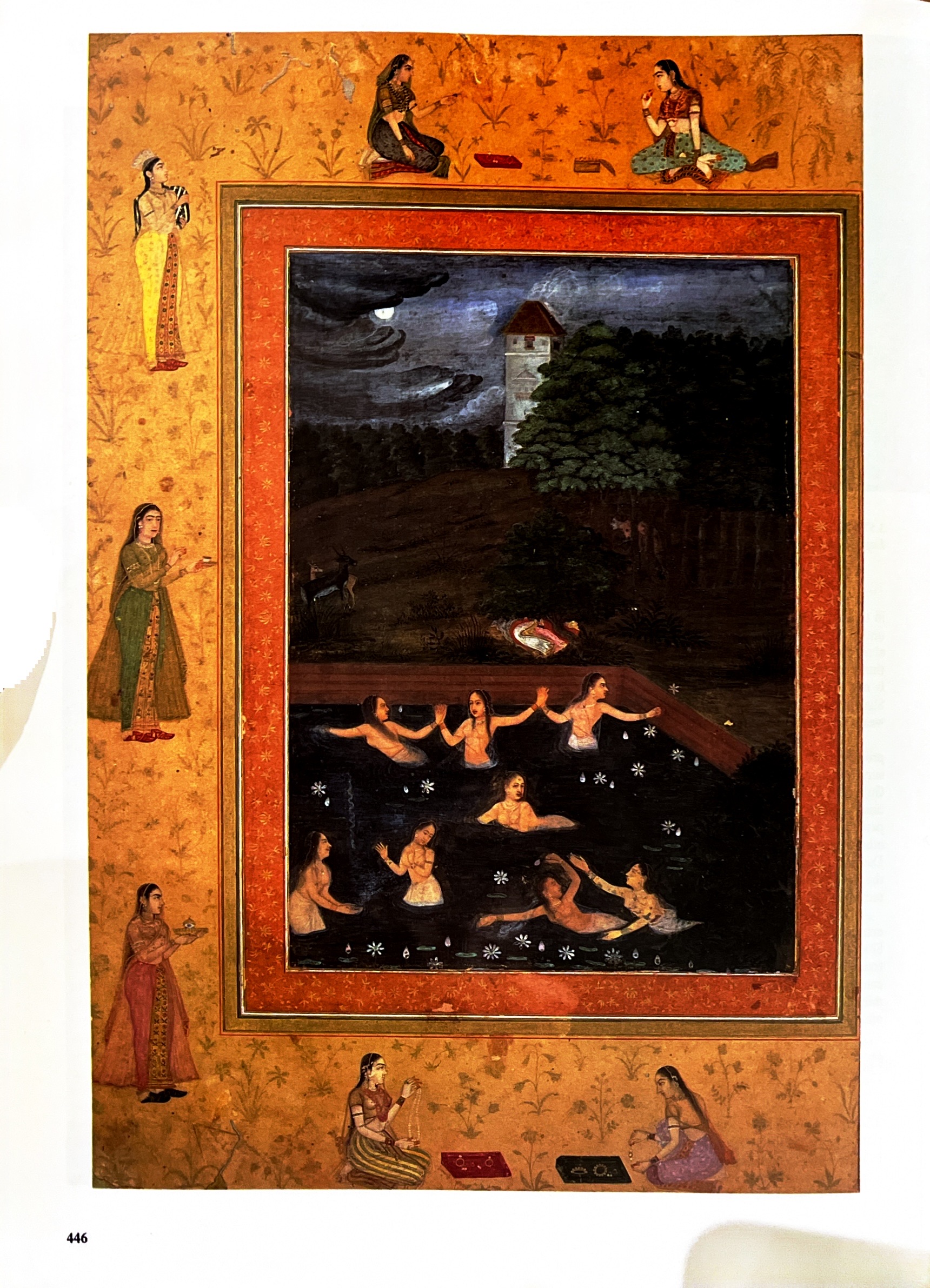
(fig. 5) Attributed to Payag, Eight Women Bathing, 1650, 23.1 x 16.3 cm, Chester Beatty Library
3. Regional Identity, Literary Legacies, and the Architectural Frame Afterwards
The zenana in Faizullah’s paintings is never fully enclosed. Its tiered terraces and arcaded verandas face outward onto gardens that extend into further gardens, and beyond them a river, fortresses, and a horizon filled with the activity of the wider world are visible. This spatial openness enables the zenana’s literary imagination to engage with geographical space. Faizullah’s painting connects these registers not as contradictory but as continuous: the literary world summoned within the zenana and the historical-geographical world visible from its terraces are part of the same pictorial and cognitive field, legible as such to a connoisseur who can move fluidly between poetic allusion and territorial reality.
This geographical expansion of the zenana’s narrative reach links Faizullah’s work to a broader eighteenth-century interest in topographical painting across northern India. As Dipti Khera has argued, Udaipur’s painters constructed a distinctive regional identity by depicting the city’s lakes and waterworks, evoking the sovereignty of Mewar through the bhava of its landscape—not merely representing physical locations but creating sensory experiences that bound connoisseurs to a particular place through shared literary and artistic knowledge. Similarly, Yuthika Sharma has shown that Mughal painters in Delhi featured the Red Fort as an emblem of imperial continuity, using topographical imagery to reaffirm geographic and dynastic consciousness for viewers who understood its symbolic weight. Faizullah’s panoramic vistas participate in this wider turn toward landscape as a vehicle of political and cultural identity, but with a distinctive inflection. Where Udaipur painters evoked sovereign mood through natural geography and Delhi painters asserted imperial continuity through monumental architecture, Faizullah anchors Awadh’s identity in the interplay between the intimate literary space of the zenana and the expansive territorial landscape it surveys. It is an interplay whose full meaning, like the bhava it encodes, was available only to viewers steeped in the Mughal poetic and pictorial traditions he drew upon.
The literary genre of shahrashob provides the poetic framework for this interplay. Originally celebrating urban prosperity and vitality, shahrashob poetry evolved in the wake of Nadir Shah’s 1739 invasion of Delhi to describe the collapse and mourning of the city. The poetry becomes simultaneously a record of urban splendor and an elegy for its disruption. Parul Singh has argued that Faizullah’s architectural vistas align with the celebratory register of this tradition, their idealized urban landscapes evoking the richness and confidence of Awadhi cities. But the distant fortress under siege carries the elegiac register of the same poetic form: the two registers—zenana abundance in the foreground and historical disruption in the distance—belong to the same literary-geographical imagination, readable as such by a viewer conversant with shahrashob’s double valence. Faizullah constructs a topography that is simultaneously celebratory and commemorative, defining Awadh’s lush and ordered landscape against the memory of Delhi’s fall. The zenana, as the site from which this double landscape is narrated, becomes the space where Awadh claims its identity as the legitimate cultural heir to Mughal literary tradition.
The subsequent history of Faizullah’s compositional schema illustrates, by contrast, what was distinctive about this integration of literary and geographical imagination and reveals two distinct paths by which it was lost, each defined by a different relationship to bhava as a system of meaning.
The first path is visible in the work of Mihr Chand, who adapted Faizullah’s panoramic compositions for his patron Antoine Polier in the 1780s (fig. 7: please see fig. 10 of the article in the link). Polier, a surveyor and engineer by training, was drawn to Faizullah’s architectural vistas as specimens of built form rather than as vehicles of literary and geographical meaning. The bhava encoded in Faizullah’s zenana—the literary resonances of the gopis, the shahrashob, the territorial claim to Mughal heritage—was not understandable to a European patron who lacked the poetic and pictorial understanding. Working within this framework, Mihr Chand transformed Faizullah’s compositions into planimetric architectural views that emphasized geometric lines, aerial perspective, and precise elevations. The zenana remained as a setting and the expansive landscape as a backdrop, but neither generated narrative; the literary cartography collapsed into architectural documentation. What Faizullah and Awadhi connoisseurs could read as a layered evocation of place, mood, and literary heritage appeared to Polier as an elegant compositional formula, available for extraction and redeployment without its meaning. The patron’s lack of cultural literacy and the painter’s use of pictorial tradition resulted in a superficial architectural composition without literary implication.
The second path is visible in late eighteenth- and early nineteenth-century Jaipur painting. Three paintings in the Chester Beatty Library (figs. 8-10) deploy Faizullah’s elements of bathing women, besieged fortresses, and panoramic gardens. However, Jaipuri painters replaced Awadhi architectural settings with distinctly Jaipuri ones and populated the scenes with European figures. In this case, the process differs from that of Mihr Chand. Jaipuri painters were not unaware of the visual tradition they were drawing on. They recognized in Faizullah’s composition a flexible idiom through which a city could assert its identity. By substituting Jaipur’s architecture for Awadh’s, they redirected the social and territorial meaning of the composition. The besieged fortress becomes a spectacle of Jaipur’s military confidence, and the panoramic garden, along with the bathing women, has literary meaning, an assertion of the city’s cosmopolitan splendor. In other words, what Jaipuri painters intended was to utilize Faizullah’s pictorial idiom to add South Asian literary meaning to the European presence, thereby presenting the international urban space of Jaipur. While the compositional grammar was retained, the Jaipuri painters consciously revisited the bhava, replacing its social and regional significance.
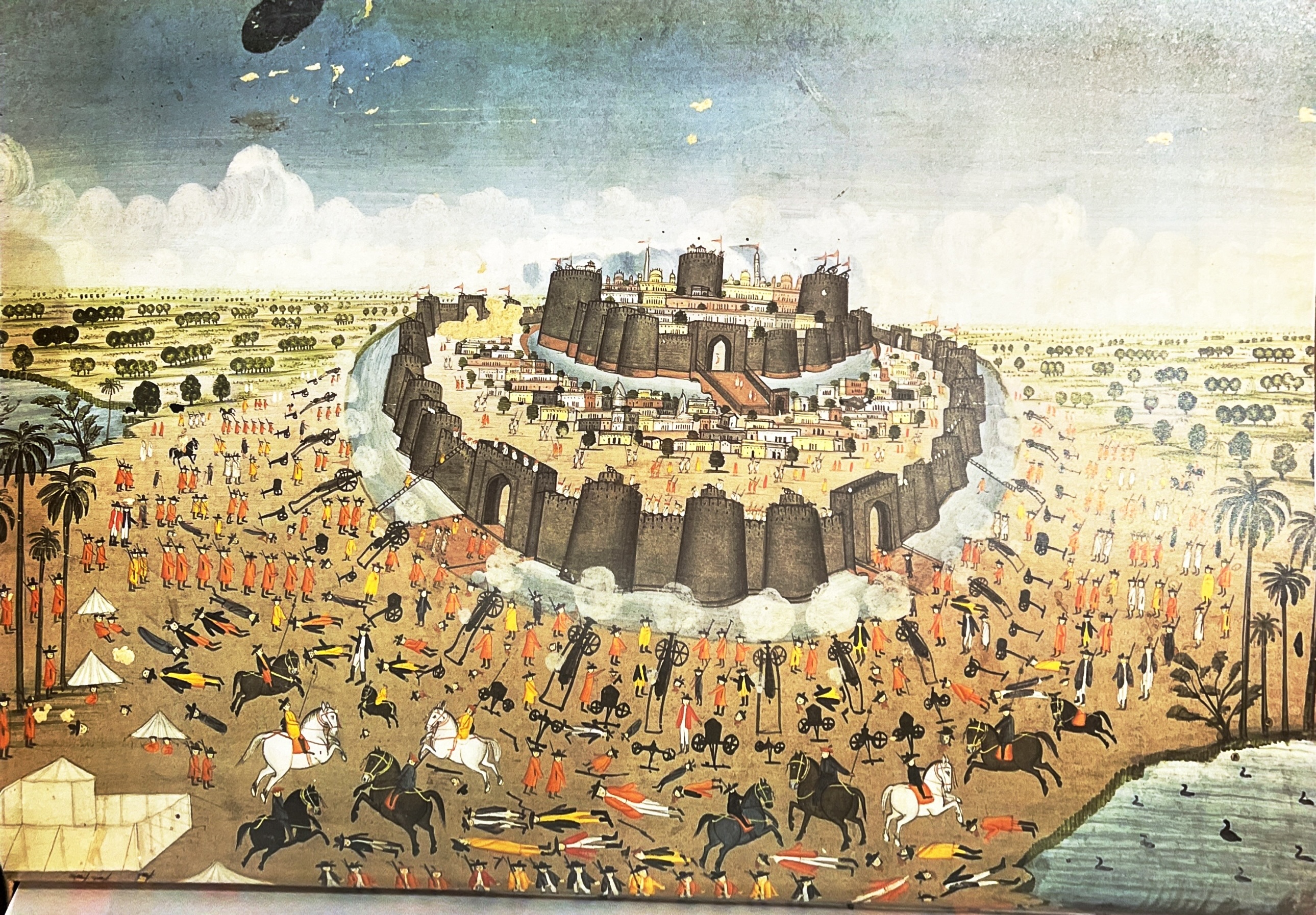
(fig. 7) A Besieged City, Jaipur, Late Eighteenth Century, Chester Beatty Library.
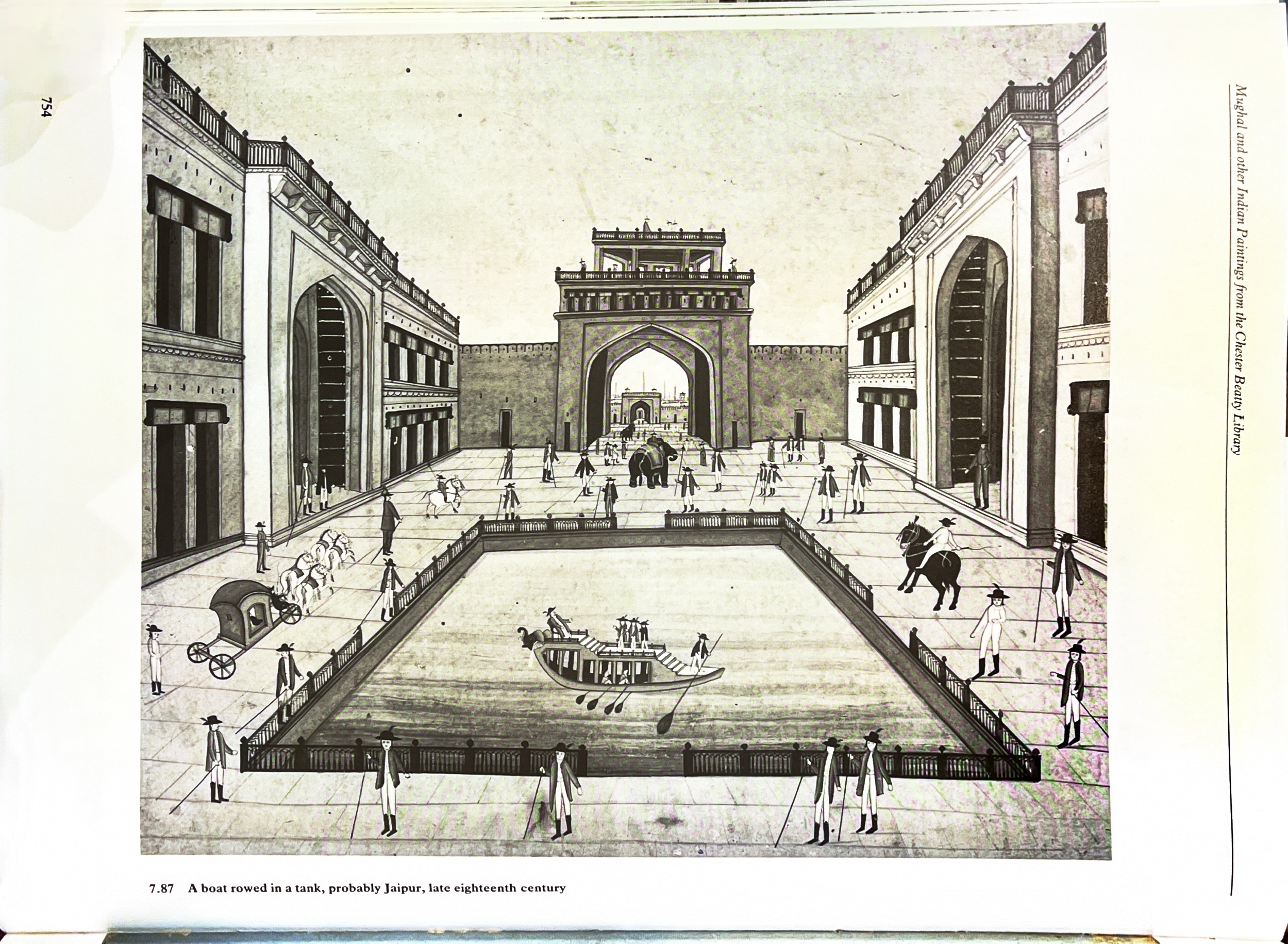
(fig. 8) A Boat Rowed in a Tank, Jaipur, Late Eighteenth Century, Chester Beatty Library.
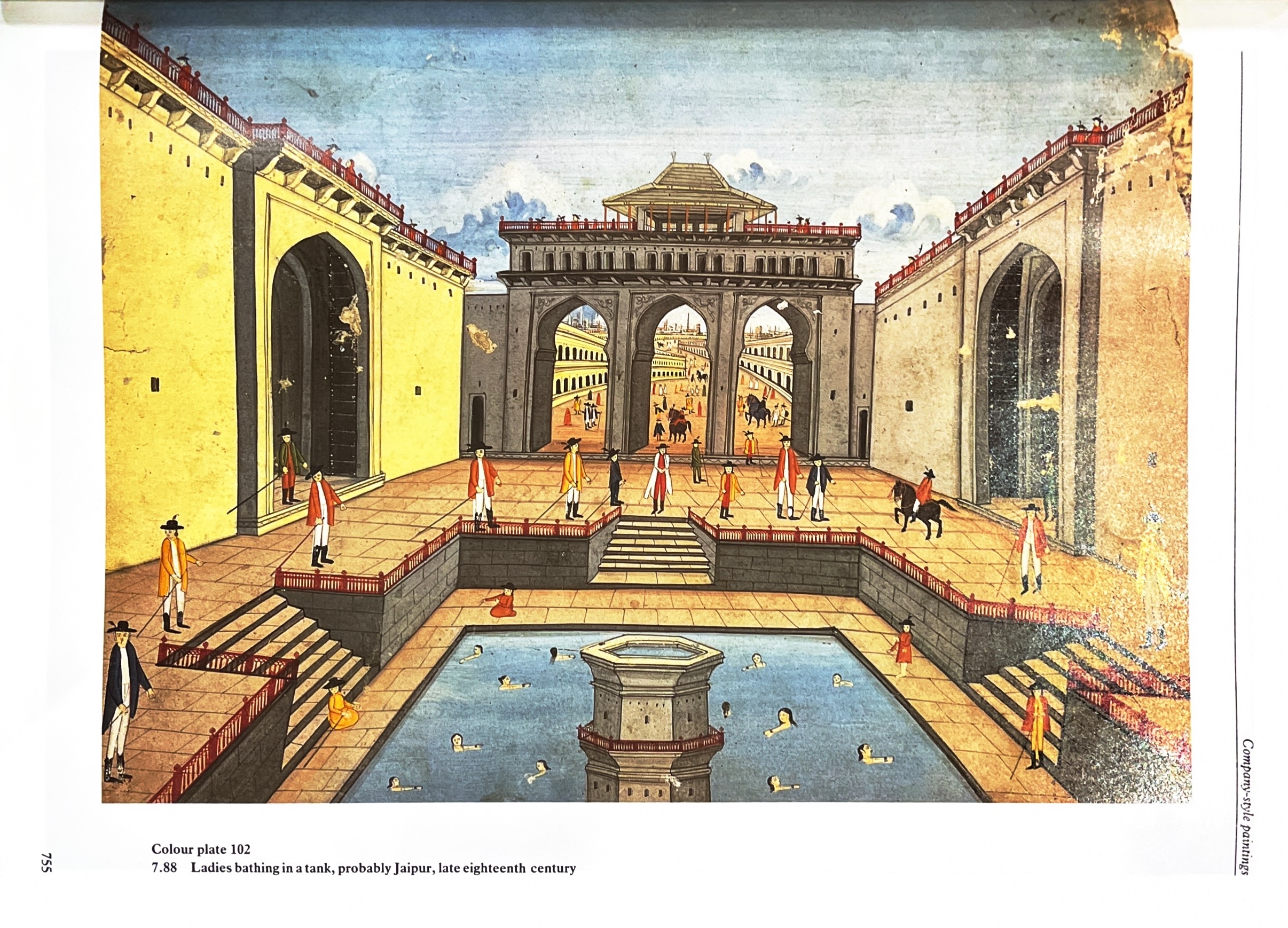
(fig. 9) A Lady Bathing in a Tank, Jaipur, Late Eighteenth Century, Chester Beatty Library.
This double trajectory demonstrates that Faizullah’s reinvention lies in the realm of semantics as well as the compositional form. He utilized the architectural frame as an active medium, encoding the complex literary and regional mood, bhava, into the panoramic landscape to construct a distinct regional identity. When later painters adopted this frame, they replaced its semantic layers, whether through a lack of literacy or interest. The meaning of architecture shifts according to the patron’s literary literacy and the specific ways in which different regions reinvent the visual form. Consequently, the architecture ceased to tell tales in Faizullah’s sense.
Bibliography available in the original thesis submission. This essay is a summary of the MA thesis submitted at the Institute of Fine Arts, New York University, April 2025.