“소녀는 소년의 소녀/소년은 소녀의 소원 (A girl is boy’s girl/a boy is a girl’s wish)” —LOONA Haseul, “소년, 소녀 (Let Me In)”
Ayoung Kim’s Delivery Dancer Codex stages a clear allegory of identity crisis, a psychological struggle happening within a single individual. It is not a story about a delivery driver’s class struggle, nor is it the artist showing off her mastery of the latest AI technology. In the guise of a delivery driver named Ernst Mo, Ayoung Kim guides us to visit a variegated and imagined world, one I read as the artist’s “belated” response to a homosexual representation that South Korean pop culture has long kept beneath the surface.
In the exhibition, the installation introduces and completes this narrative before we reach the video rooms. The second floor, where Ayoung Kim’s works begin, opens with Ghost Dancer A (2022), a display of two helmets facing each other with video playing inside, alongside Orbit Dance 10 O’Clock (2022), a set of gyroscopic devices mounted on the ceiling and the wall. A partial installation of Delivery Dancer’s Arc: Inverse (2024) prefigures this imaginative calendar system and horoscope: the system that will constitute time and space is the very ground of Ayoung Kim’s video worldview. In the adjoining room, a horizontal mural, Evening Peak Time is Back (2022), renders an obvious GL image (Girl’s Love, a genre of romance between women), and in front of that there are two female drivers fighting (or perhaps sexually initiating) on a floor of shattered glass. This is not a mere juxtaposition, but it lays down the keywords the videos will take up: delivery, time and space, and even same-sex desire.
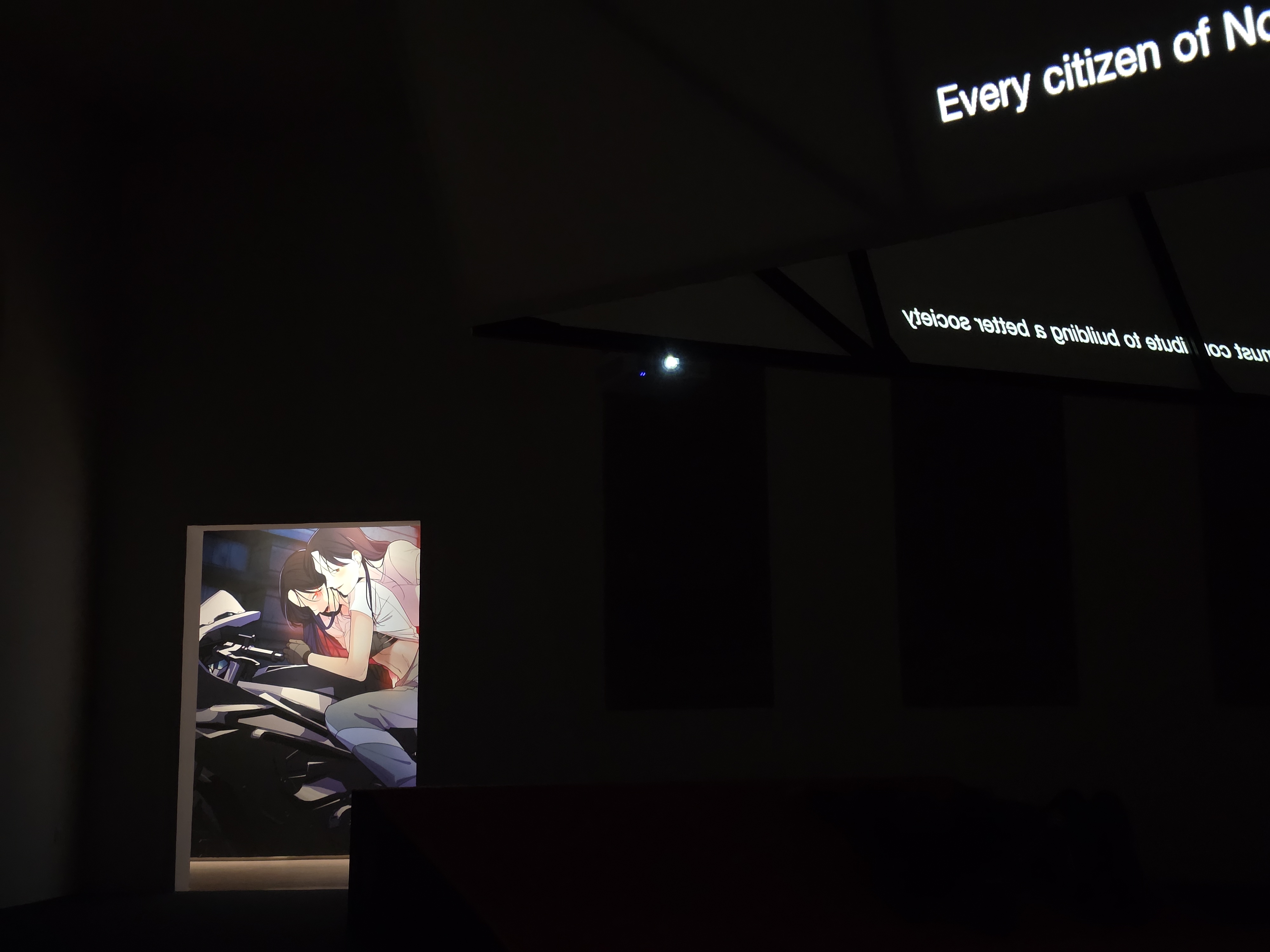
(fig. 1) Installation view of Ayoung Kim’s Delivery Dancer Codex at MoMA PS1, 2026.
The link between delivery and the coordinates of time and space is straightforward to draw. Delivery demands topographic knowledge and a consciousness of time. Ayoung Kim’s experience in the Covid era taught her that delivery drivers were sustaining connections between people during the lockdown, a period with many social restrictions and the fear of infection. Following one female driver’s working day, Kim noticed that drivers move wherever the smartphone points them, decoding designated time and space rendered as nothing more than dots and lines; each one is a delivery order. This abstract index of time and space is precisely what allowed Kim to expand both into her own created world and beyond it. As the narration puts it in Delivery Dancer’s Sphere, the driver follows “the elegant path the Dance Master (the one who assigns the routes) lays out,” and against the backdrop of Seoul’s streets and old shopping districts, Kim builds the story of the delivery driver Ernst Mo.
Another crucial thing Ayoung Kim observed about delivery was invisibility, and she saw how it could extend into something outside the normal order. Ayoung Kim said in an interview that she created Ernst Mo when she realized invisibility enabled the mobility of food and non-face-to-face delivery. Ayoung Kim’s imagination then creates unreal delivery paths: Ghost Dancers (delivery drivers) deliver along invisible routes, and Ernst Mo travels through a leak or hole in time and space that the Dance Master does not register. This gap between Dance Master’s instruction and the reality of delivery opens a way to perceive Ernst Mo’s doppelgänger, En Storm. The presence of En Storm disrupts Ernst Mo’s punctuality and distorts her timeline, until it begins to feel as though her doppelgänger truly shares her reality. Time distortion becomes the way the two of them exist together. To the Dance Master’s system, this coexistence represents a glitch that the Dance Master must correct.
Since En Storm appears as a doppelgänger, a human figure who shares Ernst Mo’s face, this representation allows us to read her as another self of Ernst Mo. In Sphere, time distortion is what enables Ernst Mo to meet En Storm. Ernst Mo says it is not a story of nature, that time slows or races past whenever En Storm is near. Together they are one self with two faces, one living out her everyday order, the other exposing what lies outside it. During the conversation between Ernst Mo and En Storm, one of them says, a little bit vaguely, that keeping a difference in time is one way for them to exist with each other. In other words, holding each other in another dimension may keep them safe together, and yet both desire to meet and reunite.
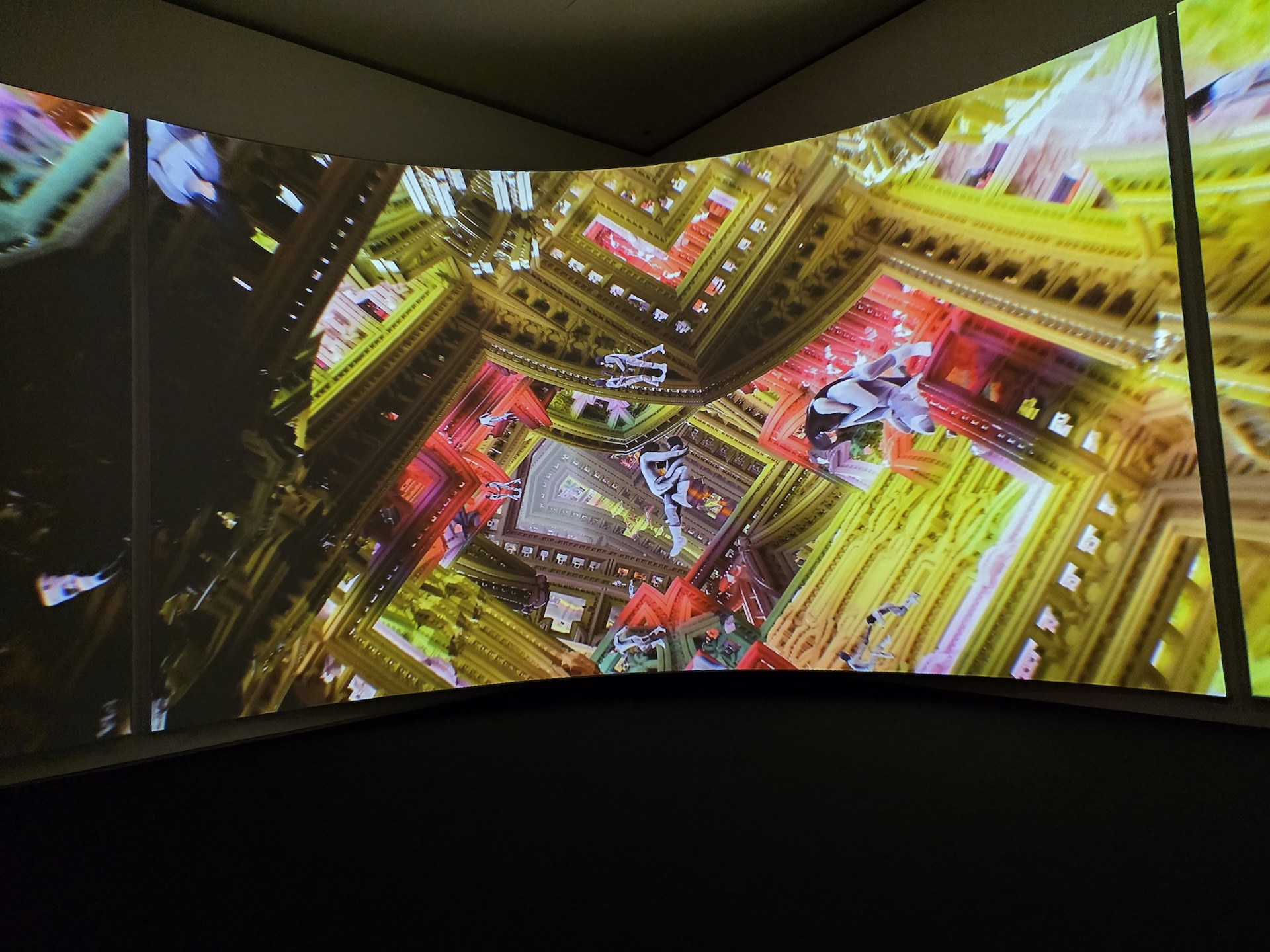
(fig. 2) Delivery Dancer’s Arc: 0° Receiver (2024) at MoMA PS1, 2026.
Time and space become an allegory of social structure and systematic infrastructure, and they work to correct Ernst Mo’s disrupted worldview. In Delivery Dancer’s Arc: 0° Receiver, the exchange between the two no longer settles for existing apart in separate spaces; it turns instead toward disturbing time itself. Ernst Mo says, “En Storm, will you defy time? Your existence is nothing but a fracture in time.” En Storm answers, “No, time flows and collapses in infinite directions.” What Ernst Mo confirms here is the uniformity that time imposes, and the punctuality that delivery demands. Through her exchange with En Storm, what had previously stopped in Sphere as curiosity and longing now transforms into something else: the sense that a being could exist outside the measure of time, heterogeneous to it. At the same time, punctuality is a normalizing force precisely because the Dance Master appears as its enforcer. When the delivery runs late, she arrives to punish and to correct. Fleeing her through the spaces of Seoul, the two are taken into a labyrinth-like space, whose dimensions cannot be estimated. One of them says, “Where is the forgotten time? There is a vast net, a sea of possibility. It may stretch across a wide expanse or sit in a narrow region. A difference in density. Like space, time too is infinitely divisible, and so are we.” And in this multidimensional, imagined space, the two female figures fully unite in every manner. Then the narration says, “there is but one world denied to us, a world where we might endure together, a world where we could truly be side by side, but… to imagine a possibility that cannot exist,” and they seem to fight, a struggle that is also an embrace.
In Delivery Dancer’s Arc: Inverse, Ernst Mo no longer flees the uniformity of time but resists. Where 0° Receiver was an escape from the Dance Master’s correction, Inverse turns escape into resistance: Ernst Mo cracks the uniformity open and sets out to rescue and recover an invisible time the system has abandoned. Delivery is no longer the carrying of goods but a way of recovering that time. The timekeeper warns that all time will converge into one, yet Ernst Mo digs toward a hidden time, symbolized by an ancient time device buried deep within the futuristic city of Novaria. She says, “There are other times. A week runs to seven days, or to ten, and a single day is never the same. Some have vanished, and some remained.” Here her resistance takes the form of the struggle with En Storm, a struggle that also carries a sexual nuance, and among the many norms that time enforces, it is the gendered one that comes to the fore. The desire to reunite, to reach an invisible other, returns once more across the two videos and brings an unconventional identity to the surface, and through the two figures’ struggle, it invites us to read that identity as bound up with gender.
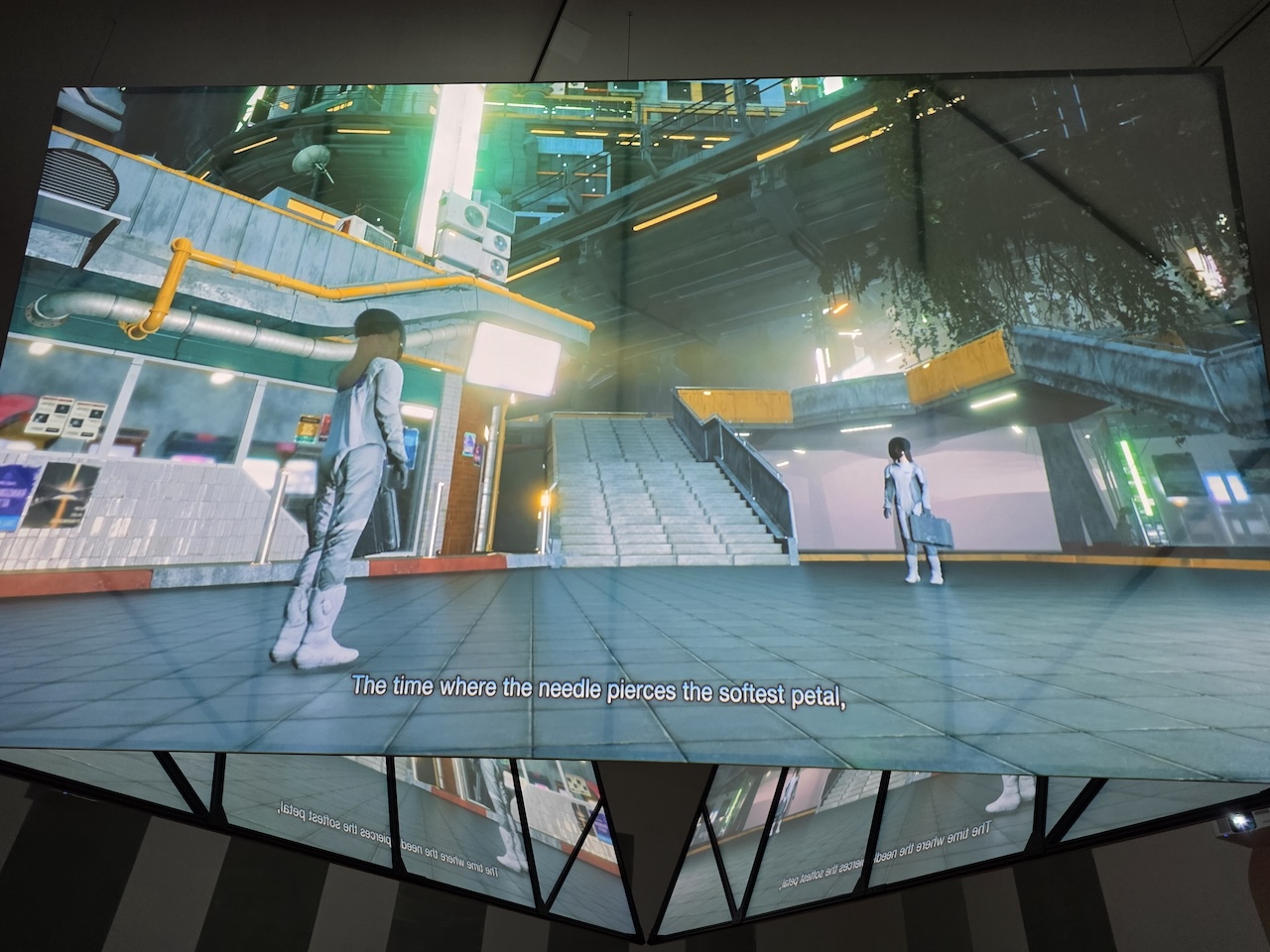
(fig. 3) Ayoung Kim, Delivery Dancer’s Arc: Inverse (2024) at MoMA PS1, 2026.
But why does Ayoung Kim build an imagined city to carry this invisibility of time and space? The choice is not hers alone. The same structure runs through the music videos of the K-pop group LOONA, and reading the two together reveals the purpose of the imagined city. Haseul’s solo track Let Me In showcases a girl’s struggle with her self-identity split in two. The video opens with Haseul arriving on an unrealistic Icelandic plain, a space outside the everyday where her identity is contested rather than settled. Gathering fallen, diamond-like shards of ice, she sings atop a downed aircraft and meets a boy who looks like her. The lyrics say her heart is being colored by him, yet at the end Haseul kills the boy with her diamond, only to realize he was a white bird that had been precious to her all along.
The video does not present a love story between a boy and a girl. Haseul plays both, and they are one person. A single self with two sides has a social self bound by norms and another self, latent and held down, that everyday life cannot contain. The lyrics turn on the moment: realizing that her other self is in fact herself, the girl is embarrassed, and so she hesitates to take on the boy. When the girl kills the boy at the end, she is trying to unify her identity into one. But to kill the doppelgänger is not only to erase her sexual identity marked as abnormal. This act means straying entirely from herself and losing her precious self, just as her diamonds fall when she kills her other self.
Haseul, a self in two parts, stands in the same relation to Ernst Mo and En Storm in Ayoung Kim’s work. In LOONA’s worldview, the unreal setting of Iceland becomes a psychological realm cut off from reality, a place where identity is contested. And because it is cut off, Haseul’s struggle does not stay her own. It opens onto other girls who carry the same crisis of identity. This is the way LOONA’s worldview works. Members in the same confusion of identity bring out their inner struggle through music and gather into one group, LOONA. The same context runs through Ayoung Kim’s leap from Seoul to Novaria. Delivery, the most ordinary of acts, becomes a means of seeking another self, just as music draws LOONA’s members into one group. What Ayoung Kim does is take an everyday material and open it up to something larger.
Ayoung Kim’s Delivery Dancer Codex is a belated visualization of this identity crisis and girl’s love, and it belongs to a longer visual tradition. Korean culture reached the world not only through surface subjects like music, but also through what those subjects could carry: the possibility, rendered visually, of a same-sex code beneath them. In K-pop, fan fiction reads the possibility of love between members, and a music video can confirm it in images. At the domestic level, these scenes are considered mere visualizations of a song that conveys the mood, and what looks like friendship between women remains friendship. Abroad, audiences read them further as a same-sex code, and it was on this reading that LOONA found its cult following. Ayoung Kim seems likewise to follow the delivery rider’s journey, yet her work sits in the same context, the contested visualization of homosexuality and of the self in Korean popular culture. This is why I say it is belated, and it locates her work within the context of Korean visual culture.
Ayoung Kim has said she had no wish to tell a grand narrative through her work. Art, she adds, owes nothing to the world, only to what it means to exist in it. Across the Delivery Dancer Codex, she widens the meaning of invisibility, from a disrupted reality to a future city, and that invisibility first takes visible form as the doppelgänger and then as the identity of homosexual desire. The trilogy ends with Inverse “In another life, we will not know each other. In the countless density, there is endless possibility. She leaves open one more encounter between Ernst Mo and EnStorm. It ends in failure. Same-sex narratives that once seemed to rise through Korean pop culture has slipped back beneath the surface, and K-pop has lost the visual meaning that girl’s love once carried, in an age that turns it into a pop product. Yet the two-person conversation can be kept, and so can the promise of reunion: “We failed this time, but in nineteen years, in the rabbit year of the fourth lunar month, let us meet again.” This is what Ayoung Kim’s work offers. When we do not fit the standard of the normal, it shows us how to look for the meaning of our existence.